.png)
New Hazardous Chemical Information System: What Aquatic Facilities Need to Know
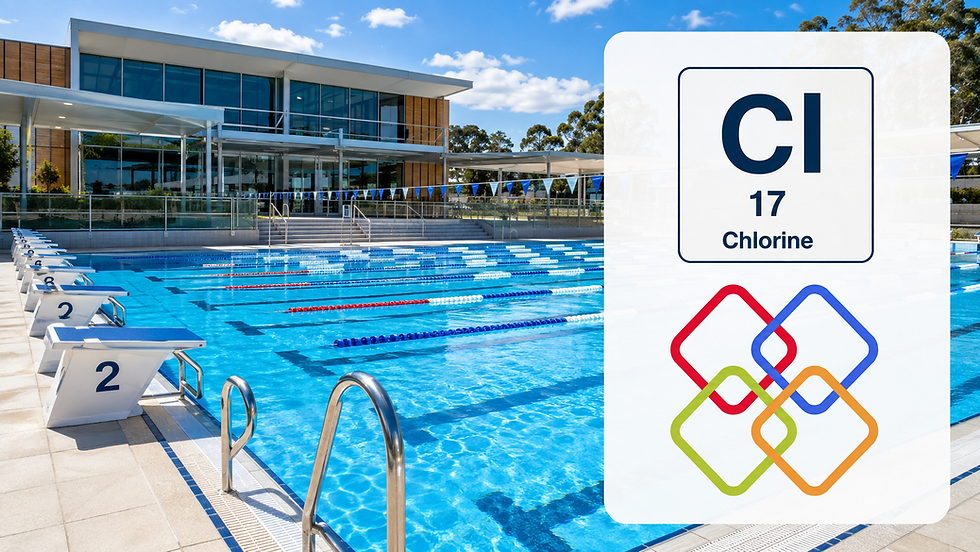
Safe Work Australia has launched an updated Hazardous Chemical Information System (HCIS) to help Australian workplaces prepare for the introduction of new workplace exposure limits for airborne contaminants.
The new Workplace Exposure Limits (WELs) will replace the existing Workplace Exposure Standards (WES) from 1 December 2026, subject to implementation within the work health and safety laws of each jurisdiction.
For aquatic facility owners and operators, the change provides an important opportunity to review how hazardous chemicals and airborne contaminants are identified, stored, handled and controlled.
Why this matters for aquatic facilities
Aquatic facilities routinely use chemicals to maintain water quality, disinfect surfaces and operate plant and equipment. Depending on the facility, these may include:
Chlorine gas
Sodium hypochlorite
Calcium hypochlorite
Hydrochloric acid
Carbon dioxide
Ozone
Cleaning and disinfecting products
Water-treatment and pool-testing chemicals
Workers may be exposed through leaks, spills, incompatible chemical mixing, dosing-system failures, poor ventilation, maintenance activities or the generation of gases, vapours, mists and dusts.
Exposure limits are only one part of managing these risks. Aquatic facility operators must eliminate hazardous chemical risks where reasonably practicable or minimise them using appropriate controls. Compliance with an exposure limit does not necessarily mean that all workers are protected, particularly those with individual sensitivities or pre-existing health conditions.
What is the new HCIS?
The Hazardous Chemical Information System is an online guidance tool that provides information about hazardous chemical classifications and workplace exposure limits.
The updated system includes:
A modern and easier-to-use interface
A single search function for chemical information
Globally Harmonised System of Classification and Labelling of Chemicals (GHS) information and WEL data displayed together
Improved compatibility with mobile phones and tablets
Updated chemical-classification information
The HCIS can help aquatic facility operators check the information contained in chemical labels and Safety Data Sheets (SDS). Manufacturers and importers can also use it to support chemical classification, labelling and SDS preparation.
However, the HCIS should be treated as a supporting resource. It does not replace a current supplier-issued SDS, workplace risk assessment, exposure monitoring or professional safety advice.
What aquatic facility operators should do now
Facilities should not wait until December 2026 to begin preparing. Operators should use the transition period to:
Review the hazardous chemical register
Confirm that every chemical used, stored or generated at the facility is recorded and supported by a current SDS.
Check existing and future exposure limits
Use the HCIS and Safe Work Australia’s WES and WEL information to determine whether exposure limits relevant to the facility will change.
Inspect chemical storage and plant rooms
Review chemical segregation, ventilation, bunding, signage, security, emergency access, labelling and spill containment.
Review chemical risk assessments
Consider routine operations, deliveries, maintenance, breakdowns, spills, leaks and reasonably foreseeable emergencies.
Assess airborne-contaminant risks
Identify tasks that may release gases, vapours, mists or dusts and determine whether air monitoring or specialist occupational hygiene advice is required.
Confirm the effectiveness of controls
Prioritise elimination, substitution, isolation and engineering controls before relying on administrative controls or personal protective equipment.
Update emergency procedures
Ensure procedures address chemical spills, gas releases, incompatible mixing, dosing-system failures, evacuation, first aid and emergency-service notification.
Consult and train workers
Workers should understand chemical hazards, safe handling requirements, alarm systems, emergency procedures, required protective equipment and incident-reporting arrangements.
Existing exposure standards still apply
Until the WELs take effect on 1 December 2026, aquatic facility operators must continue to comply with the current Workplace Exposure Standards for Airborne Contaminants.
Facilities should also monitor advice from their state or territory work health and safety regulator, as implementation and regulatory requirements may vary between jurisdictions.
How Drowning Prevention Australia can assist
Drowning Prevention Australia (DPA) supports aquatic facility owners and operators to identify and manage safety risks across their facilities, workforce and operating systems.
DPA can provide safety consultancy and support in areas including:
Aquatic facility safety assessments and audits
Hazardous chemical and plant-room risk reviews
Emergency planning and scenario exercises
Workplace inspections and compliance reviews
Risk registers and risk-control reviews
Incident investigation and critical-incident reviews
If your facility needs assistance reviewing its hazardous chemical arrangements or preparing for the introduction of workplace exposure limits, contact Drowning Prevention Australia to discuss a tailored safety consultancy.
Preparing early will allow aquatic facilities to address gaps methodically, strengthen worker protection and ensure their chemical-management systems remain safe, practical and compliant.


Comments