.png)
Leading Emergency Preparedness in Aquatic Facilities
Develop the capability to lead emergency preparedness, response and recovery within aquatic facilities. Learn how to identify emerging risks, establish governance frameworks, develop emergency management systems, coordinate training and exercises, and strengthen organisational resilience to ensure facilities are prepared for complex and high-consequence events.
Aquatic facilities operate in complex environments where emergency events can escalate rapidly and have significant consequences for patrons, staff, contractors and facility operations. Incidents such as drowning and non-fatal drowning events, spinal injuries, chemical releases, severe weather, fire, infrastructure failures, missing persons and security threats require more than an immediate operational response. Effective emergency preparedness relies on strong leadership, comprehensive planning, clearly defined responsibilities and regularly tested systems that enable facilities to respond confidently and effectively when emergencies occur.
This program is designed for aquatic facility managers, operations managers, duty managers, safety professionals and organisational leaders responsible for emergency preparedness and operational resilience. Participants will learn how to assess emergency risks, develop emergency management plans, establish governance and response frameworks, coordinate training and exercises, and evaluate organisational readiness. Through practical workshops, emergency planning activities, scenario-based exercises and industry case studies, participants will strengthen their capability to lead emergency preparedness and build more resilient aquatic facilities.


.png)
Modules Overview and Activity
The program begins with emergency risk identification within aquatic facilities, focusing on the types of events that can escalate quickly in complex public environments. Participants will examine drowning and non-fatal drowning events, spinal injuries, chemical incidents, fire, severe weather, infrastructure failure, missing persons and security threats, using aquatic-specific scenarios to understand how emergency risks present in real operations.
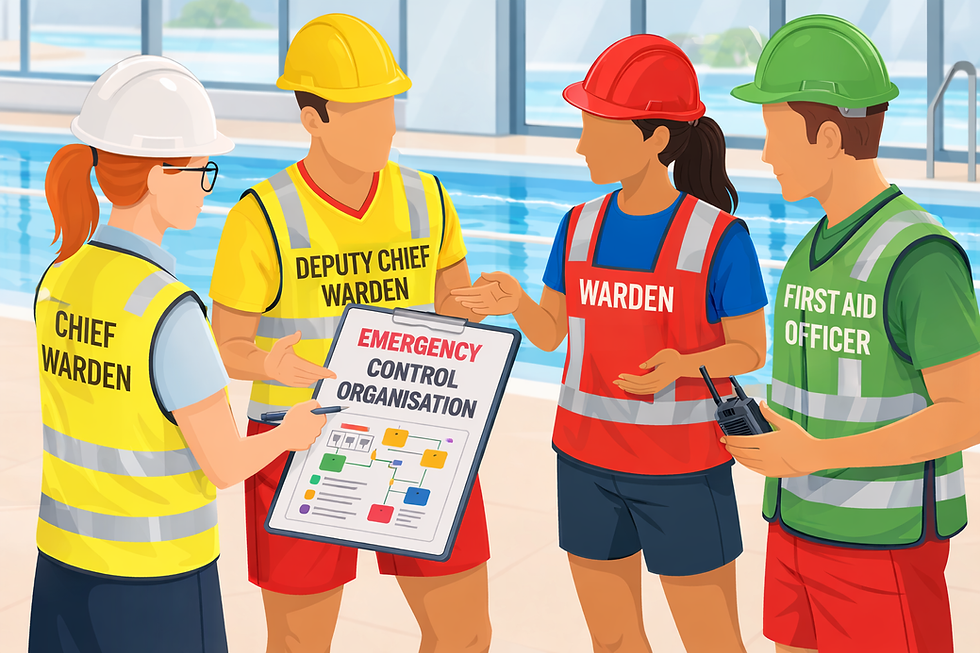
The program then progresses to emergency planning and governance, including the development of facility-specific emergency management plans, response structures, communication pathways and clearly defined responsibilities. Participants will explore how Emergency Planning Committees, Emergency Control Organisations, duty managers, lifeguards, contractors and facility leaders work together to support preparedness and coordinated response.
The program then focuses on training, exercises and validation, examining how emergency procedures are tested through drills, tabletop exercises, simulations and post-exercise reviews. Participants will learn how to design meaningful exercises that test realistic aquatic facility emergencies, identify system gaps and strengthen staff confidence, coordination and decision-making.
The program concludes with recovery, assurance and continuous improvement, focusing on personnel accountability, welfare support, debriefing, corrective actions, business continuity and lessons learned. Participants will explore how emergency planning becomes an ongoing assurance process that strengthens organisational resilience and improves readiness for future incidents.
Participant Experience
Assess emergency risks within aquatic facilities.
Develop and review emergency management plans.
Design Emergency Planning Committee and Emergency Control Organisation structures.
Participate in tabletop emergency exercises.
Evaluate emergency preparedness systems.
Develop emergency training and exercise programs.
Analyse major aquatic industry emergency case studies.
Create an emergency preparedness improvement roadmap for their facility.
Trusted Partner of Governments and Industry Leaders






Who should attend?
Develop the capability to lead emergency preparedness, response and recovery within aquatic facilities. Learn how to identify emerging risks, establish governance frameworks, develop emergency management systems, coordinate training and exercises, and strengthen organisational resilience to ensure facilities are prepared for complex and high-consequence events.
Facility Managers
Team Leaders and Supervisors
WH&S Managers
Senior Managers
Asset Managers
Duty Managers
Strengthen Your Capability and Advance Your Practice
DPA Academy - Shaping the Next Generation of Safety Leaders

Related Courses
Discover more Drowning Prevention Australia courses to help improve your aquatic industry career